

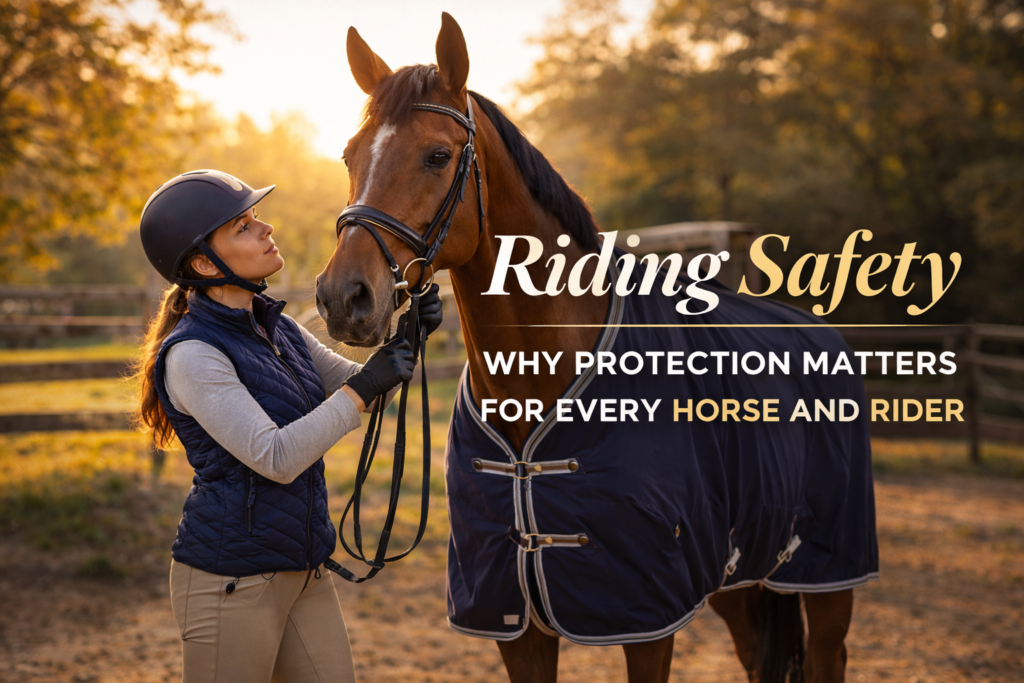
Horse riding is one of the most rewarding experiences a person can have. The connection between rider and horse creates a unique sense of freedom, balance, and trust. However, with that experience comes responsibility. Riding safety is not just important—it is essential for protecting both the rider and the horse.
Every ride involves movement, speed, and coordination between two living beings. Without proper precautions, even a small mistake can lead to injury or discomfort. That is why experienced riders and trainers always prioritize safety before stepping into the saddle.
Why Riding Safety Is Important
Horses are powerful and sensitive animals. They can react quickly to their surroundings, whether it’s a sudden sound, a change in terrain, or an unfamiliar object. Proper riding safety measures help prevent accidents and create a controlled, confident riding experience.
Safety is important for three main reasons:
1. Protection for the Rider
Horse riding involves balance and control. Protective gear such as helmets, boots, and proper riding equipment reduces the risk of injury.
2. Comfort and Safety for the Horse
Horses also need proper gear to avoid discomfort or injury. Well-fitted saddles, blankets, and riding accessories help maintain comfort and prevent strain.
3. Better Riding Performance
When both the rider and horse feel safe and comfortable, communication becomes easier. This improves balance, control, and overall riding performance.
Essential Safety Tips for Horse Riding
Riding safely starts with simple habits that experienced riders follow every day.
Wear Proper Riding Gear
A certified riding helmet, proper boots, and comfortable riding clothing are essential for protection and stability.
Check Equipment Before Riding
Before every ride, inspect the saddle, stirrups, straps, and other riding equipment to ensure everything is secure and in good condition.
Understand Your Horse
Every horse has its own temperament and behavior. Spend time understanding your horse and building trust before intense riding sessions.
Choose a Safe Environment
Begin riding in open, safe areas with proper footing. Avoid slippery or uneven ground that may cause accidents.
Warm Up Before Riding
Just like athletes, horses also need warm-up time. Allow the horse to walk and stretch before starting intense riding activity.
Protection for Horses in Different Conditions
While riding safety focuses on the rider, the horse also needs protection in various environments. Horses often face changing weather conditions, insects, dust, and other environmental factors.
Protective coverings and well-designed equestrian gear help protect horses from cold weather, excessive heat, insects, and outdoor exposure. These solutions help maintain comfort and allow horses to perform naturally during training or riding.
Building Trust Between Horse and Rider
True riding safety comes from trust. Horses respond to calm, confident riders who communicate clearly. When riders understand their horses and maintain proper safety practices, the relationship becomes stronger and more enjoyable.
Patience, proper training, and consistent care help build a reliable partnership between horse and rider. This bond allows both to move together with confidence and control.
The Responsibility of Every Rider
Horse riding is not just a sport or hobby—it is a responsibility. Riders must ensure the safety of both themselves and the animals they ride. Proper equipment, safe environments, and thoughtful care are essential parts of responsible riding.
When safety becomes a priority, horse riding becomes more enjoyable, comfortable, and rewarding for everyone involved.
A well-protected rider and a well-cared-for horse create the perfect balance for a safe and fulfilling riding experience.